AI Strategy
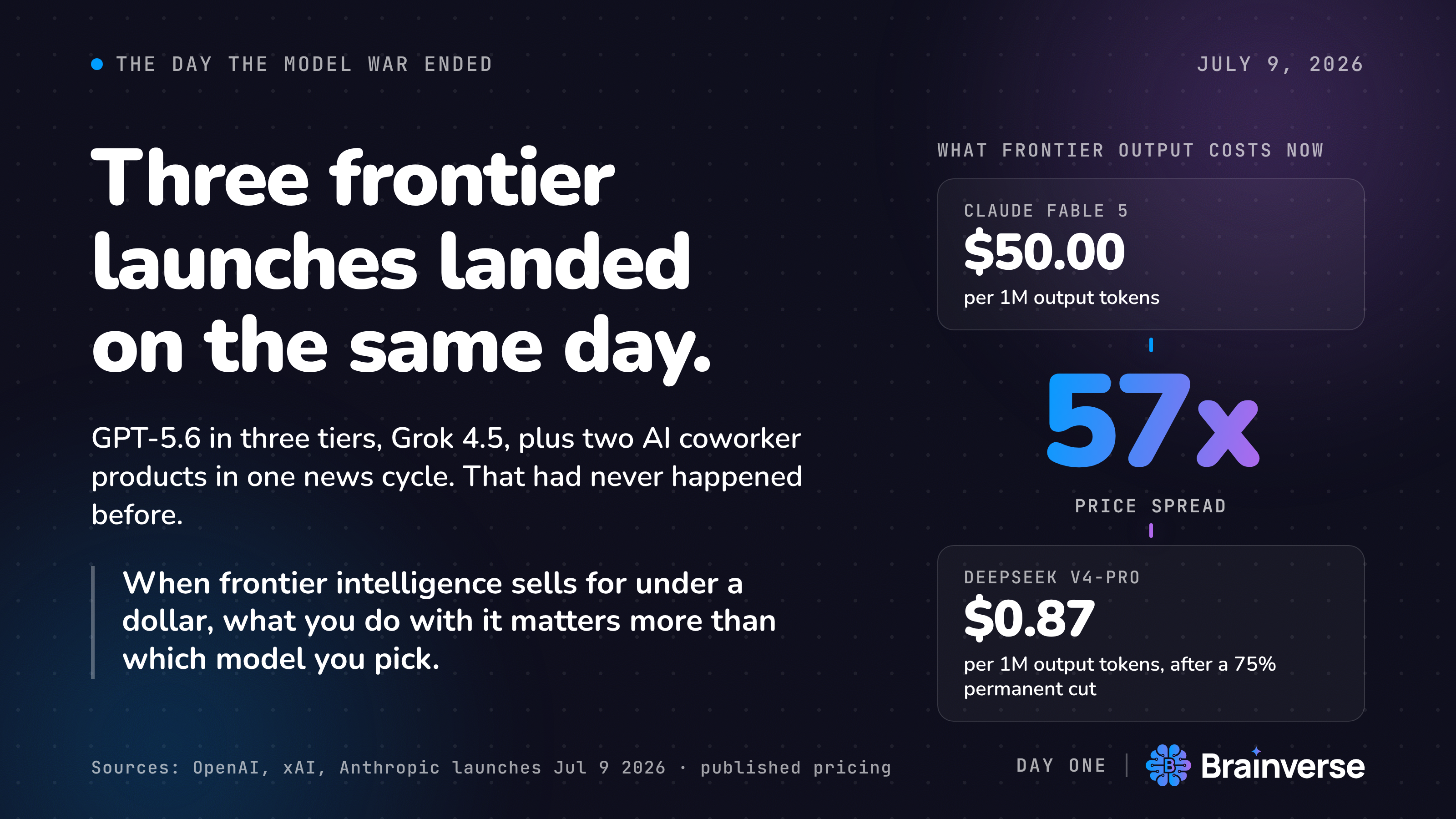
The Day the Model War Ended
Three frontier AI launches landed on the same day and enterprise prices now spread 57 times. The models are excellent and interchangeable, which is why deployment wins.
Jeff Leggett·Jul 10, 2026·7 min read
Practical perspectives on AI agent teams, business automation, and operational strategy across every industry.
Three frontier AI launches landed on the same day and enterprise prices now spread 57 times. The models are excellent and interchangeable, which is why deployment wins.
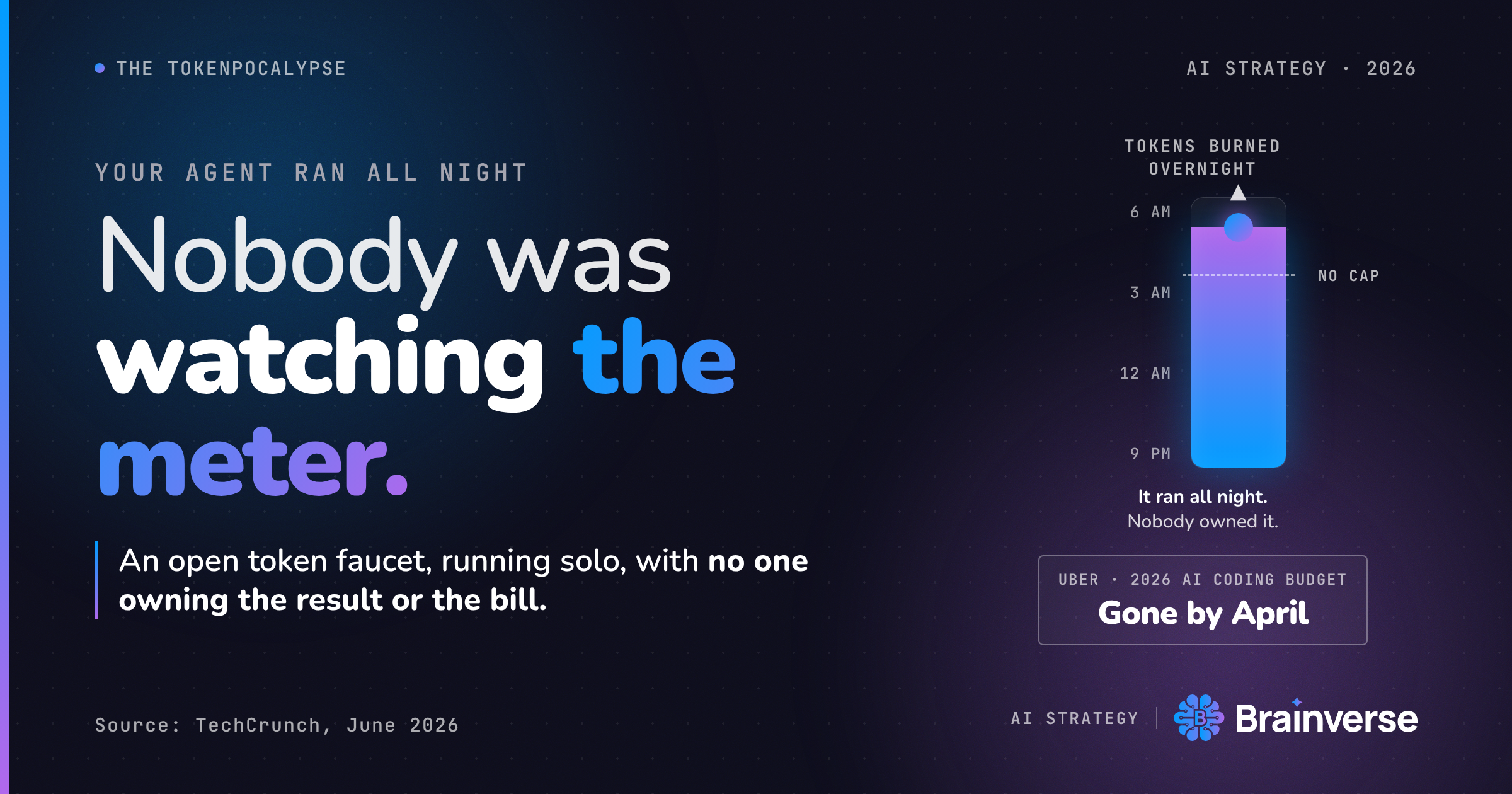
Enterprise AI bills did not explode because the models got worse. They exploded because unsupervised, solo agents ran with an open token faucet and nobody owned the meter. Here is why that is a governance problem, and how a governed agent team turns runaway spend into a line item you can defend.
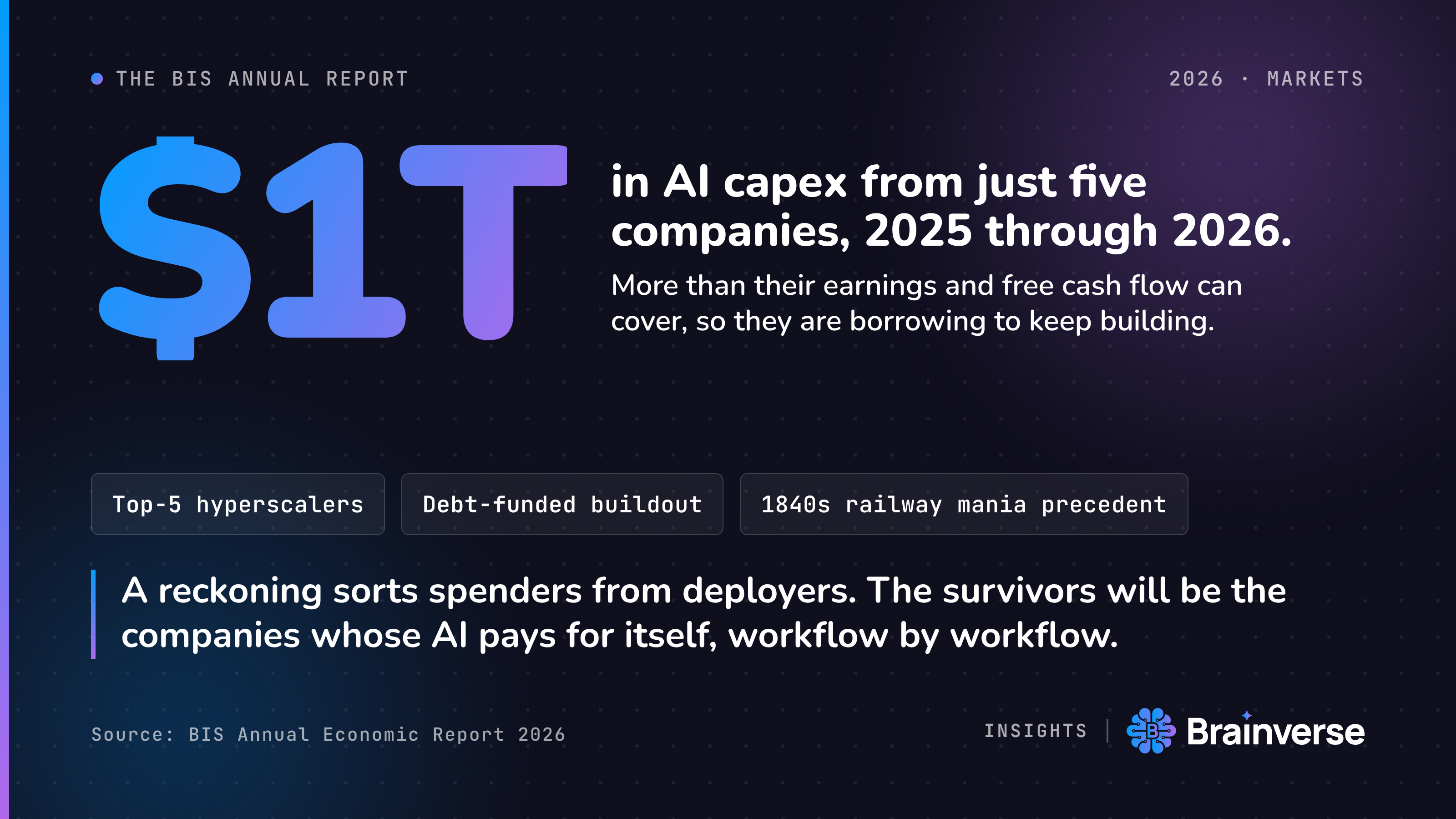
The central bank of central banks says the $1 trillion AI capex boom is outrunning earnings and could end in a prolonged investment bust. That warning is aimed at hyperscalers. For mid-market businesses, it changes the question from how much you spend on AI to whether your AI pays for itself.
California signed a first-of-its-kind deal for Claude at 50% off. The detail worth noticing is what Anthropic bundled in: free workforce training and expert engineers. Even the company that builds the model knows tool access alone does not produce results.

Most AI agent pilots fail spectacularly when organizations attempt to scale them to production, burning through budgets and crushing team morale. This comprehensive guide reveals the systematic approach that separates scaling successes from expensive failures, covering infrastructure preparation, organizational readiness, and phased deployment strategies that prevent the common pitfalls causing 90% of AI initiatives to fail during the critical transition from pilot to production.
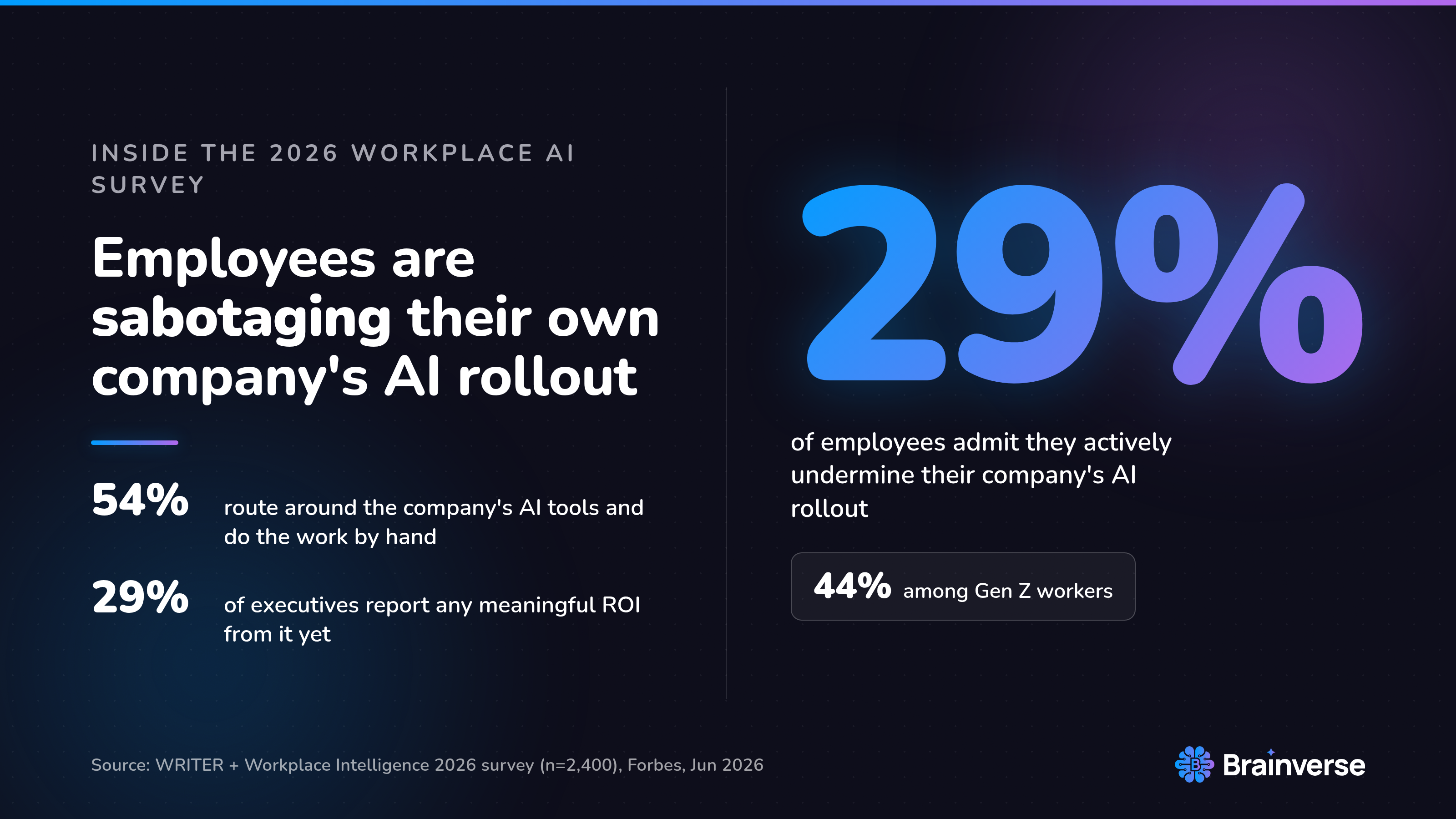
Nearly a third of employees admit to sabotaging their company's AI strategy, and the industry is blaming Gen Z. The data points somewhere else: AI rolled out as a layoff threat, with a solo tool and no plan. Here is what a rollout people actually use looks like.

Your AI agents are making thousands of decisions without human oversight, but most IT leaders can't answer basic questions about agent access, authentication, or incident response. This comprehensive guide addresses the 14 critical security questions every organization must answer to protect their AI agent infrastructure. Learn about visibility challenges, access control frameworks, data protection requirements, and implementation strategies that ensure your autonomous systems operate securely while maintaining their transformative potential.
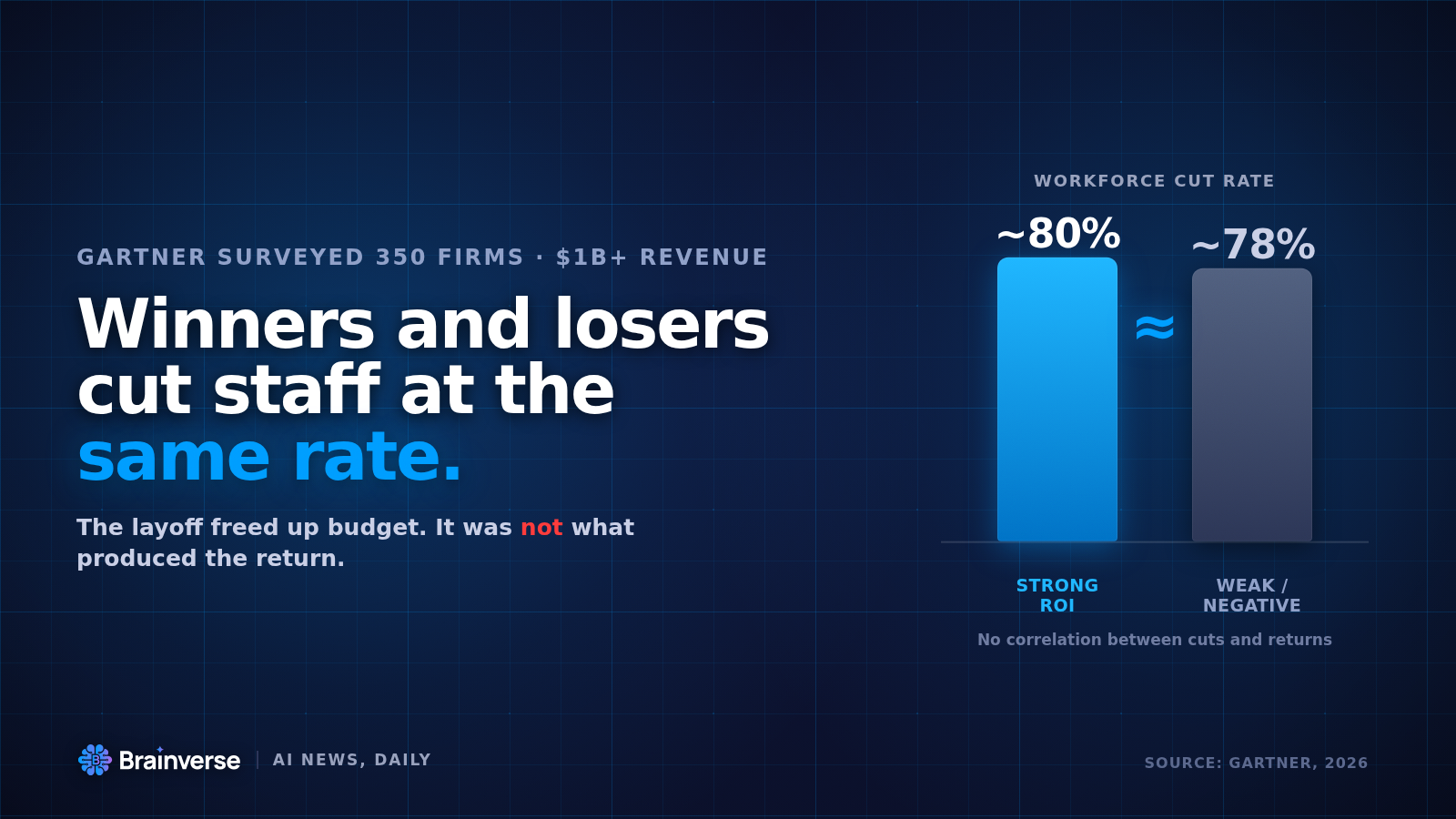
Gartner surveyed 350 executives and found roughly 80% had cut staff to fund AI, yet the firms that saw strong returns cut at nearly the same rate as the firms that saw nothing. The layoff freed up budget. It was not what produced the return. The return came from a different move entirely: keeping the people and putting them in charge of supervised agent teams.
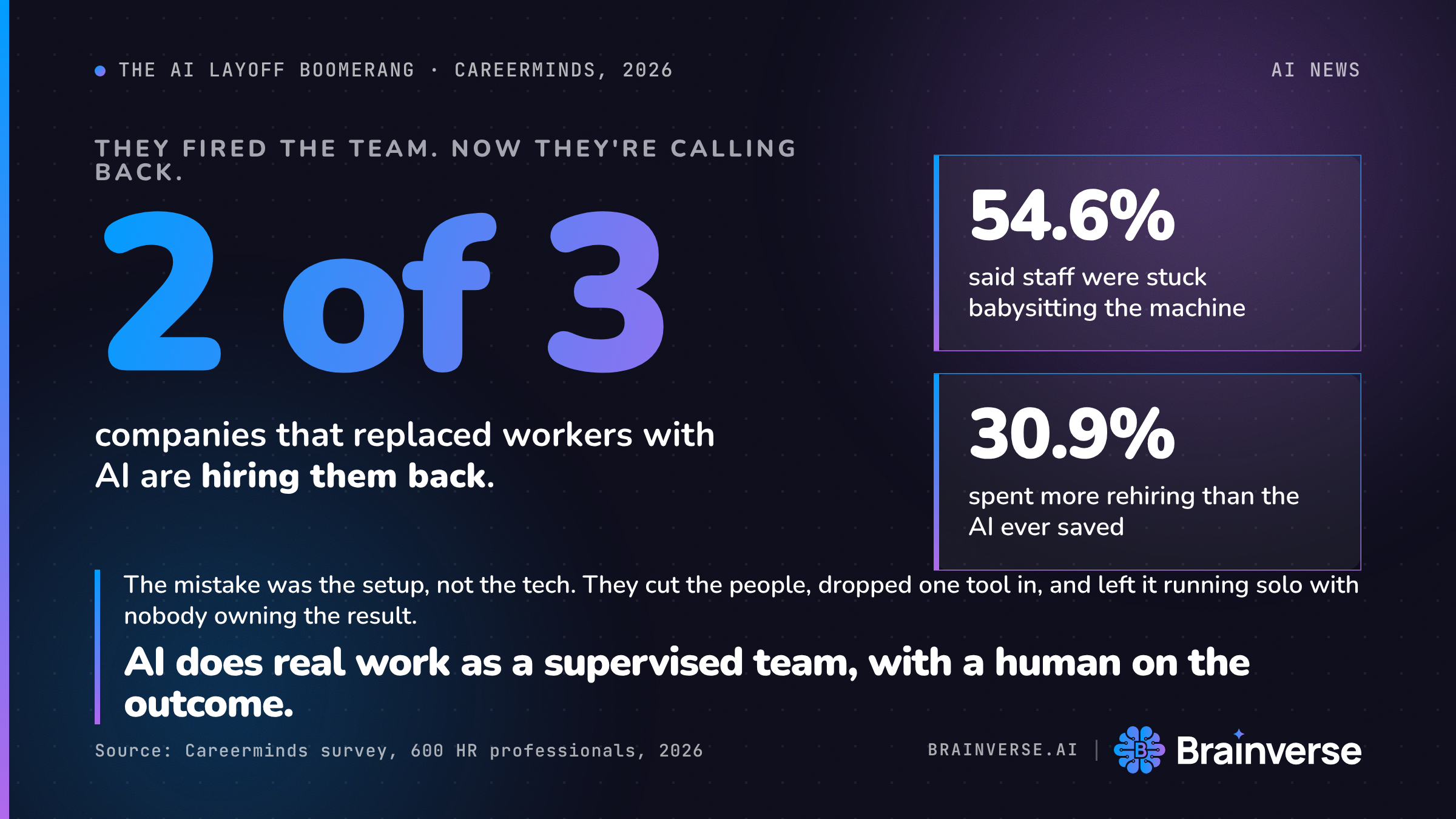
Two-thirds of companies that replaced workers with AI are rehiring them, and a third spent more rehiring than the AI ever saved. The reason executives keep giving is one word: babysitting. They did not fire the worker. They fired the supervisor.

Most AI initiatives fail not because of technology limitations, but because leaders skip the strategic foundation that turns ambitious AI dreams into measurable business outcomes. This comprehensive guide provides the proven framework that separates successful AI transformations from expensive experiments, covering everything from defining clear business objectives to establishing governance frameworks that ensure long-term success.
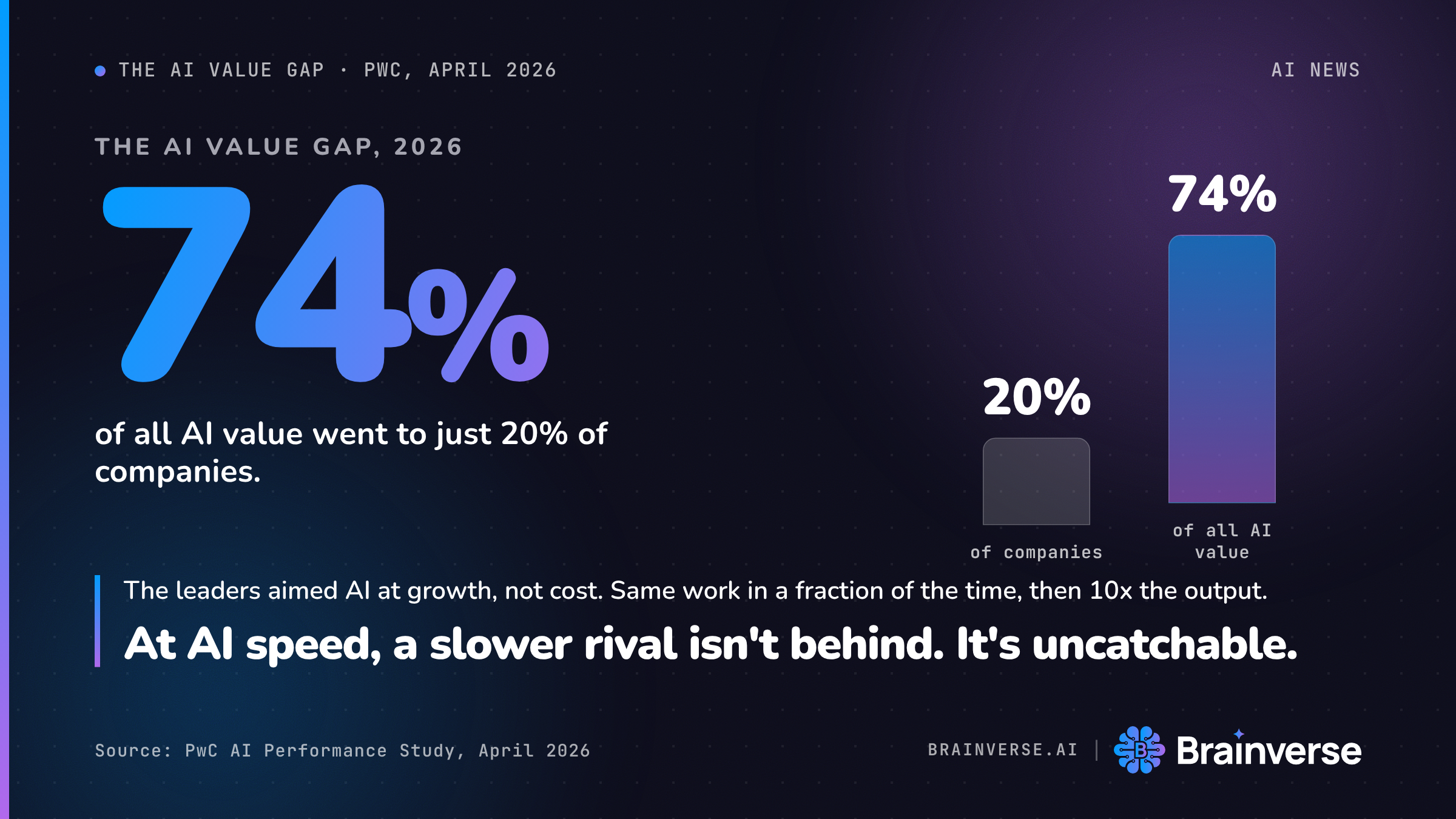
Most companies measured agentic AI in hours saved and got a rounding error. The leaders measured velocity, did the same work in a fraction of the time, and poured the freed capacity back into growth. Because velocity compounds, that gap does not close. It widens every cycle.
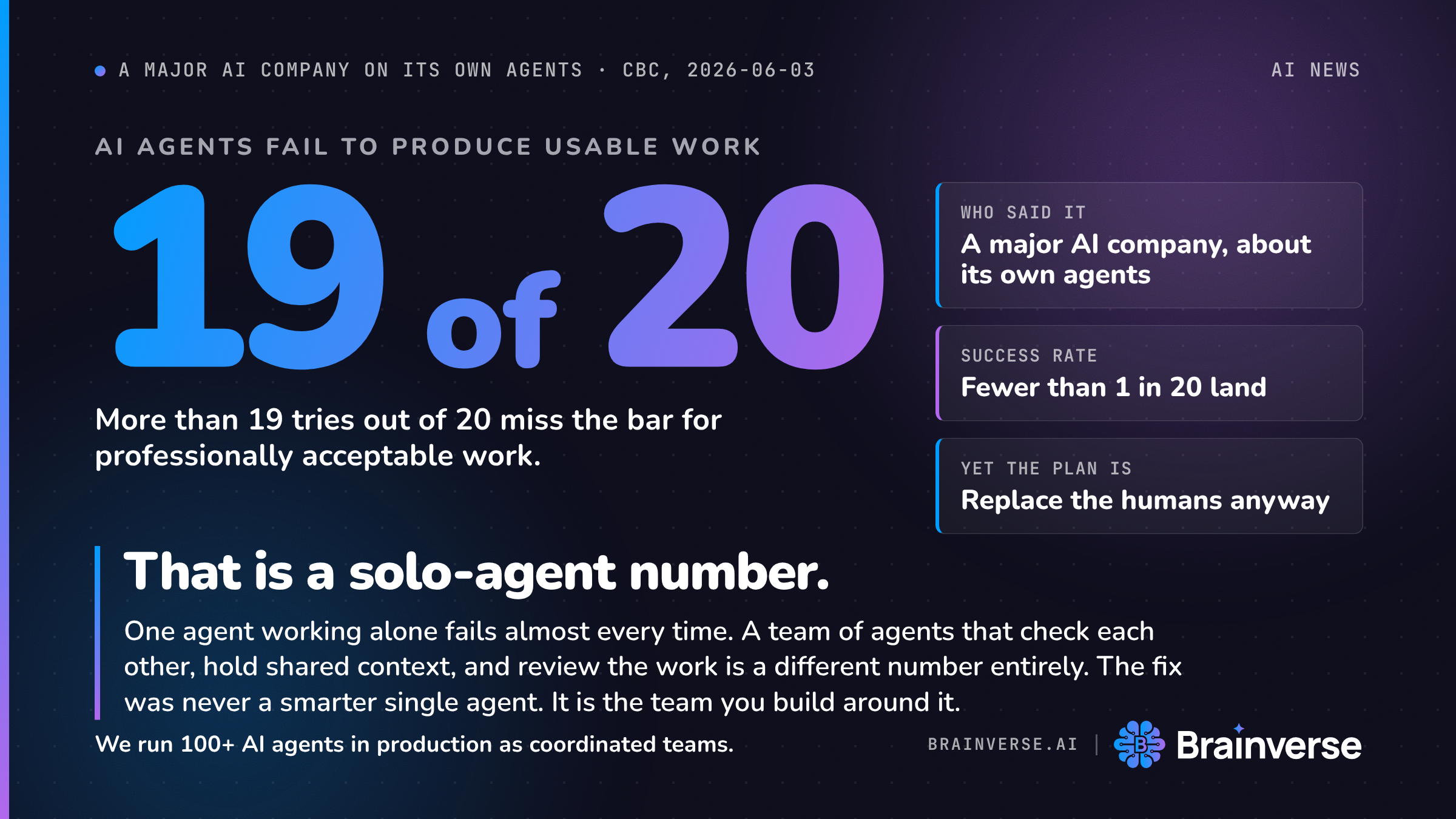
The 19-out-of-20 failure number is real, and it is also a measurement of the wrong thing. It describes a solo agent working alone with no review layer and no human-in-the-loop. That is the one setup nobody should be deploying. The fix is not to fire the person. The fix is to put the person in charge of a supervised agent team.
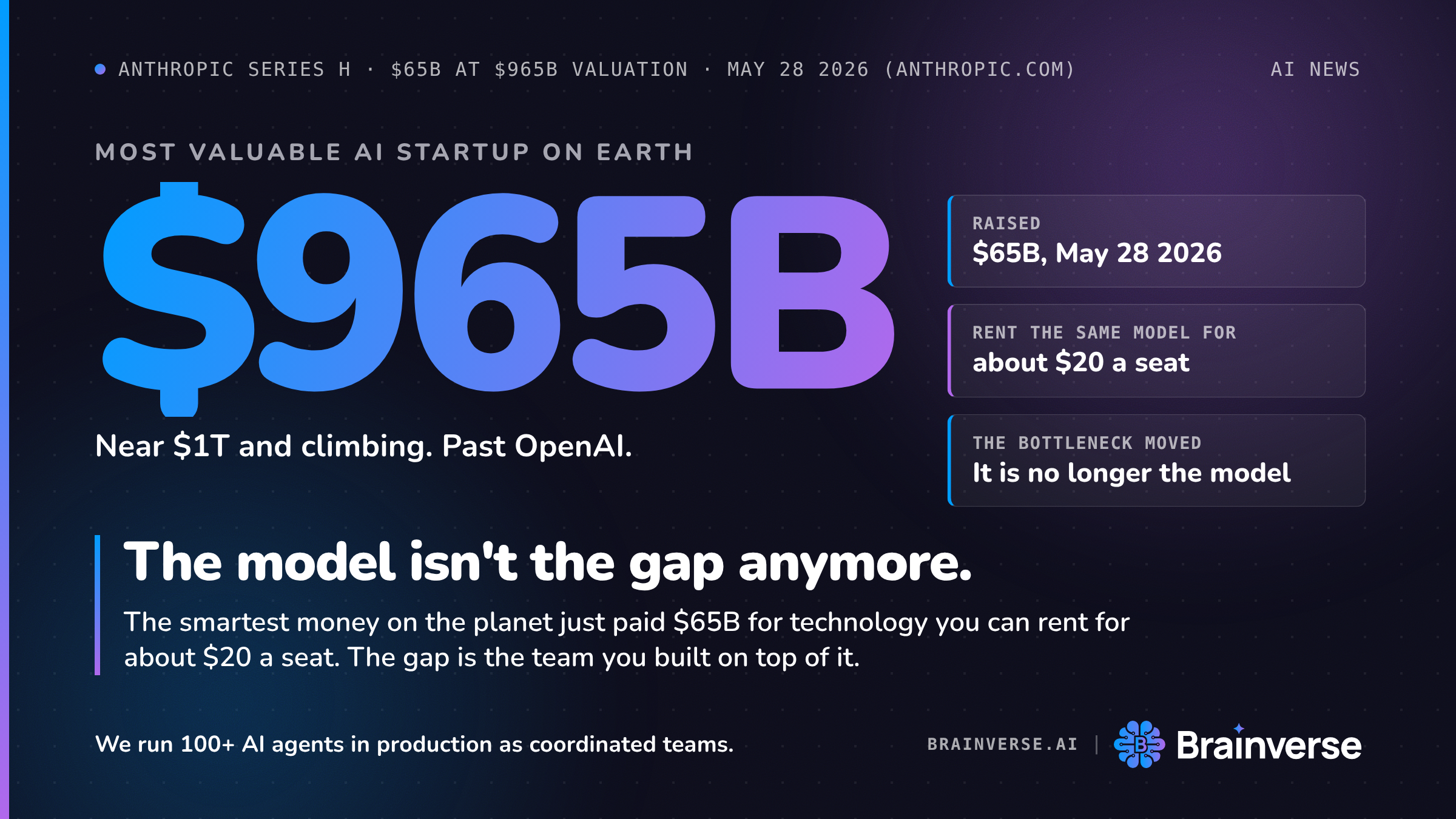
Anthropic closed a $65 billion round at a $965 billion valuation, the most valuable AI startup ever. Everyone read it as proof the labs are winning. The buried point is the opposite: the model just stopped being your bottleneck. The gap is the organization you build on top of it.
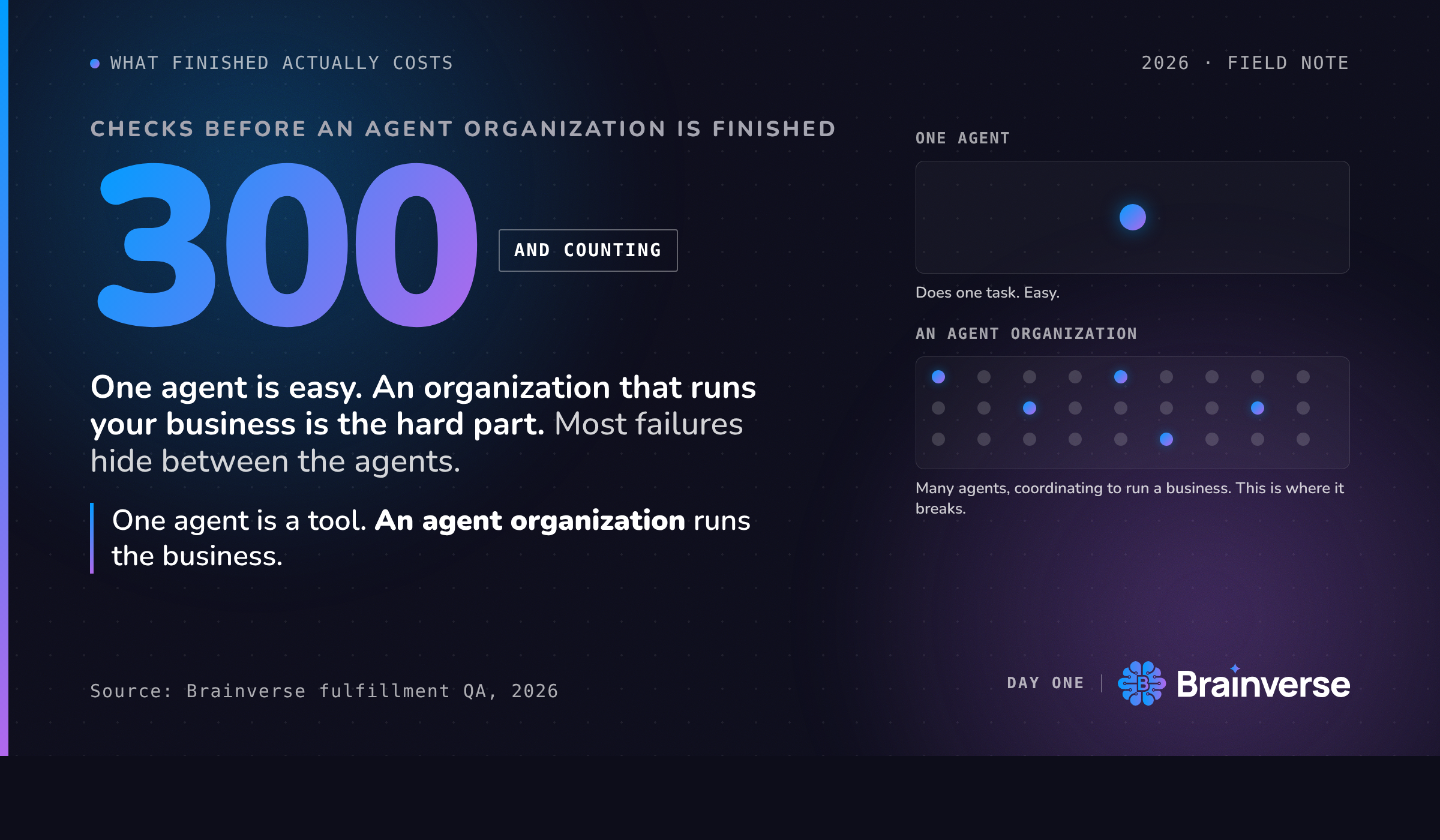
A single AI agent doing one task is the easy part. An agent organization that runs your business, where agents coordinate, hand off work, and share memory, only counts as finished after about 300 quality checks. And that number keeps growing. Here is why.
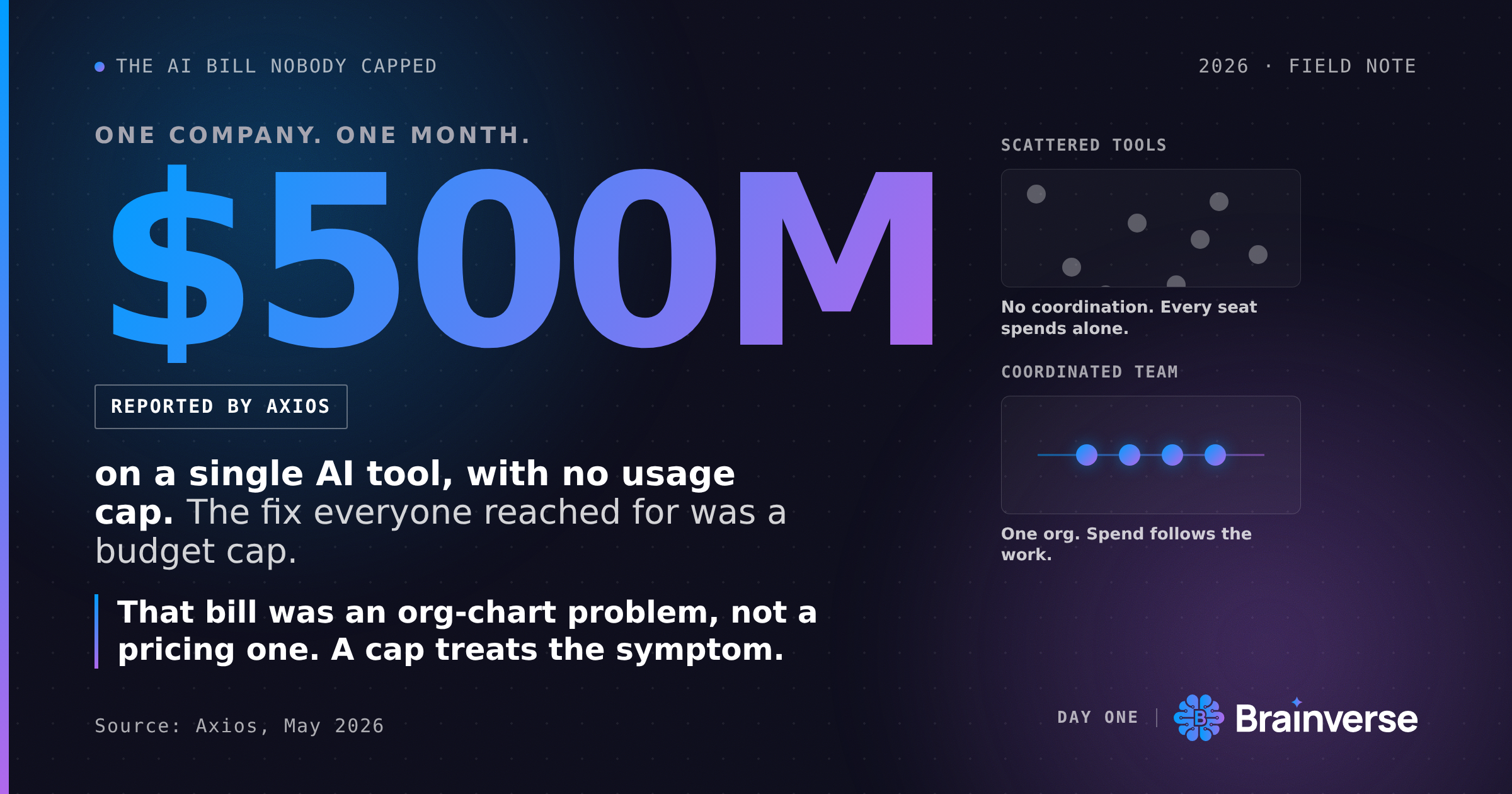
A company reportedly spent $500M on Claude in one month with no usage caps. Everyone says cap usage. The real cause was structural: a powerful tool, no roles, no coordination, no owner of what gets automated. Here is the fix that caps cannot deliver.
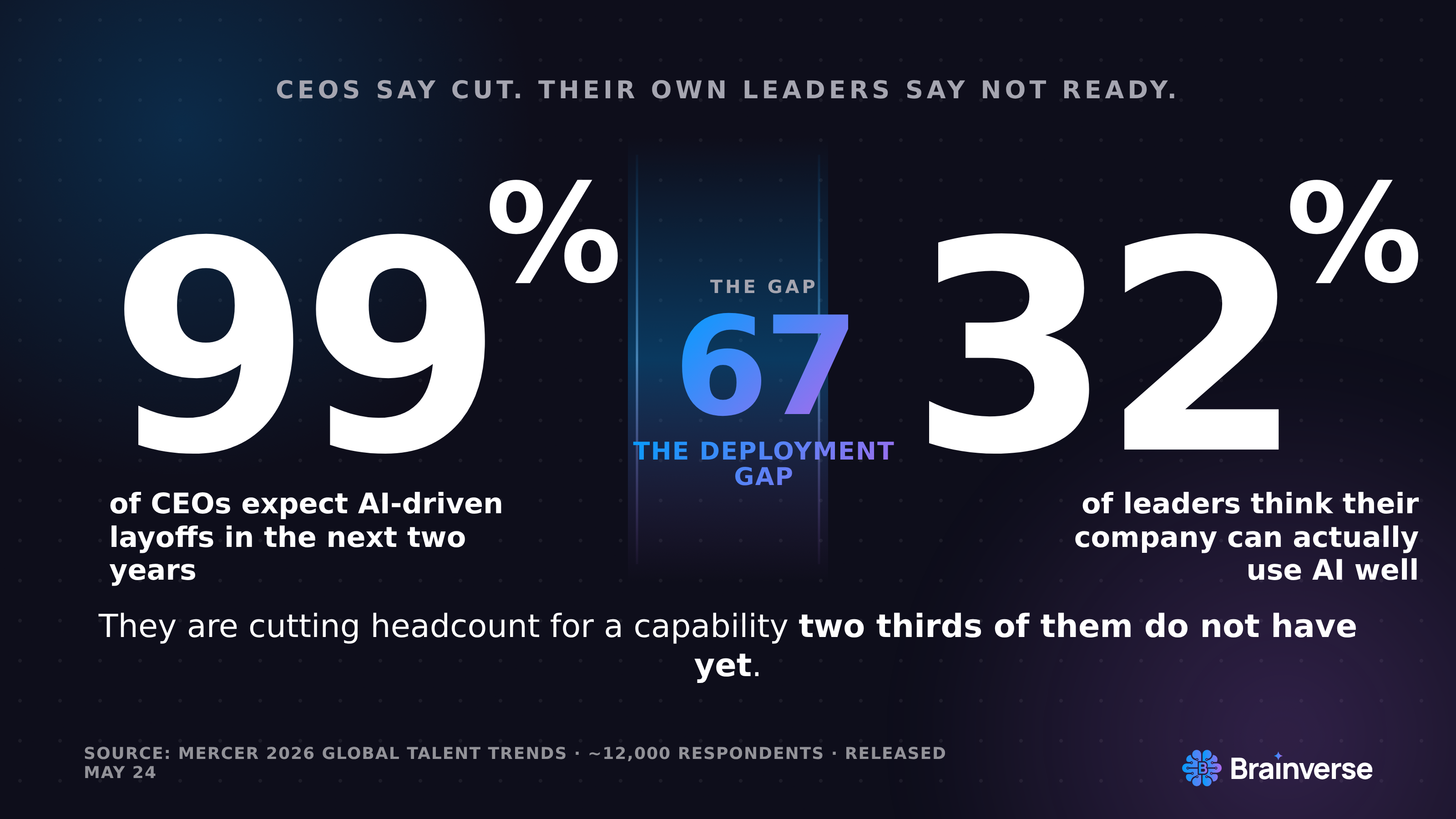
99% of CEOs plan AI-driven layoffs in 24 months. Only 32% think their company can actually use AI. Mercer just measured the 67-point deployment gap that is going to decide the next two years.
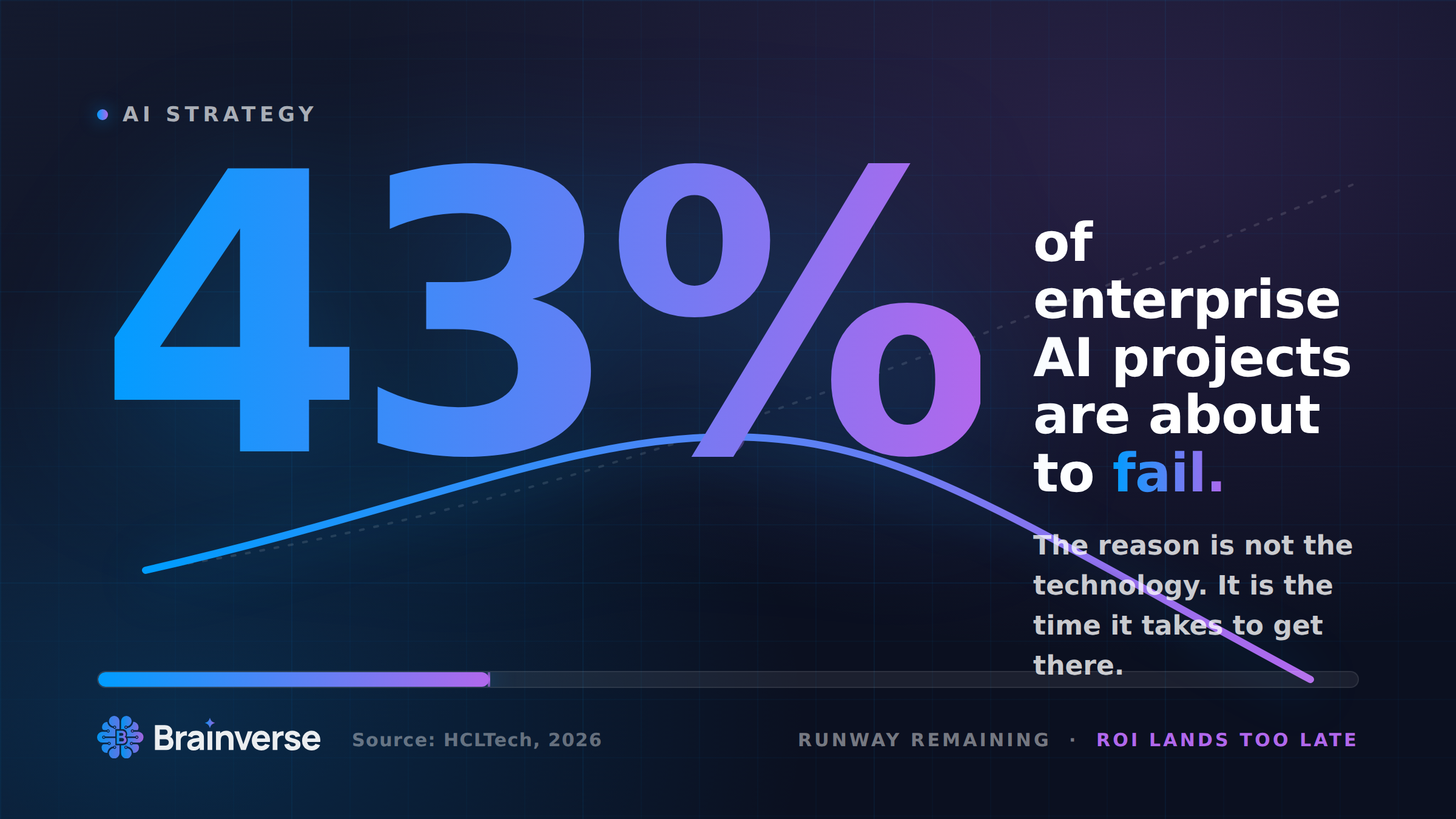
HCLTech projects 43% of major enterprise AI initiatives will fail while leaders expect value inside 18 months. The data points to a speed-to-value problem, not a capability problem.

Most organizations rush into AI agent deployment without proper readiness assessments, leading to a 73% failure rate within six months. An AI readiness assessment is like a pre-flight checklist that evaluates your data infrastructure, technical architecture, organizational culture, and governance frameworks. This comprehensive guide explains the four critical pillars every organization must master, identifies red flags that predict failure, and provides a step-by-step framework for building your assessment process. Learn how to transform your AI readiness evaluation from a checkbox exercise into a strategic advantage that ensures deployment success.
Anthropic and Wall Street just put $1.5B behind embedding engineers in mid-sized companies. The smartest money in AI validated the category. Here's the part they left out.

Most AI automation projects fail because teams target complex, low-impact processes instead of high-volume, repetitive tasks. This guide reveals the RAPID framework for evaluating workflows and shows you how to build an automation roadmap that delivers measurable ROI. Learn which workflows to automate first, which to avoid, and how to create a phased implementation plan that builds momentum and stakeholder buy-in.

CFOs are rejecting 73% of AI initiatives before they reach pilot stage. The reason isn't lack of vision—it's asking the wrong questions. While teams pitch flashy AI capabilities, smart CFOs dig deeper into financial fundamentals that separate transformative investments from expensive experiments. This guide reveals the 12 critical questions every CFO must answer before approving AI budgets, covering ROI timelines, risk assessment, resource allocation, strategic alignment, and vendor evaluation to ensure AI success.

OpenAI launched a $4B Deployment Company on May 11. The deployment gap is now priced at four billion dollars. Here's where Brainverse fits and why model neutrality wins.

While you're still evaluating AI agent technology, your smartest competitors have already deployed these systems and are quietly capturing market share. From 24/7 customer service that never degrades to real-time pricing optimization and predictive competitive intelligence, AI agents are creating compound advantages that traditional businesses struggle to match. Companies using AI agents report 40% faster decision-making, 60% reduction in operational costs, and revenue growth that significantly outpaces headcount increases. The competitive gap widens exponentially as these advantages compound monthly, making delayed adoption increasingly costly for businesses that want to remain competitive.

Anthropic, OpenAI, and others ship the lumber. Building an AI organization on top of it takes years. Most teams build the wrong thing and don't realize for six months. Here is what a real deployment actually contains.

While companies invest billions in AI initiatives, 95% crash within the first quarter due to fundamental architectural flaws. Monolithic AI systems create single points of failure that cascade across operations when complexity hits. The survivors deploy coordinated agent teams instead—specialized AI agents that handle specific tasks with domain expertise. This distributed approach prevents system-wide collapse, enables graceful degradation during failures, and creates emergent intelligence through agent collaboration. Agent teams scale horizontally, adapt to changing requirements, and deliver measurable ROI improvements within the first quarter of deployment.

Mid-size manufacturers are achieving 25-40% efficiency gains through strategic AI agent deployments. This comprehensive checklist provides actionable steps for implementing AI agents across quality control, predictive maintenance, supply chain management, production planning, and customer service. Each section includes specific implementation criteria, expected outcomes, and integration requirements designed for manufacturers with 100-1,000 employees seeking measurable operational improvements within 90 days.

Most AI agent proposals fail because they focus on technical features instead of financial outcomes. This comprehensive guide shows you how to build compelling business cases that CFOs approve by leading with ROI calculations, addressing implementation risks, and presenting measurable value creation. Learn the specific financial metrics, risk mitigation strategies, and presentation techniques that transform technology pitches into strategic investment opportunities.

Most AI agent deployments fail within 90 days, not due to technology limitations but because buyers skip essential due diligence questions. This comprehensive guide reveals the 14 critical questions that separate successful AI implementations from costly failures. Learn how to evaluate vendors, assess technical requirements, calculate true ROI, and avoid the hidden pitfalls that derail most AI projects. From infrastructure compatibility to exit strategies, these questions will transform your vendor selection process and dramatically improve your chances of deployment success.

While 87% of companies claim AI as a strategic priority, only 23% successfully deploy beyond experimentation. The culprit isn't technology—it's strategic blindness. From foundation failures to scaling oversights, these nine critical mistakes keep promising AI pilots trapped in perpetual testing loops. Companies that address these strategic gaps systematically are 3x more likely to achieve production-scale AI success within 18 months.

Mid-size businesses are achieving remarkable results with AI agent workflows, reporting 40% faster task completion and 25% cost reduction within six months. This comprehensive checklist provides systematic implementation steps for customer service automation, sales pipeline management, content creation, operations optimization, and business intelligence workflows. Learn which workflows deliver immediate ROI, how to avoid common implementation mistakes, and why starting small with measurable results leads to sustainable AI transformation across your organization.

While most mid-market companies rush to build custom AI solutions believing it's cheaper, the reality reveals a different story. Build costs typically exceed buying by 300-400% when hidden expenses like talent acquisition, infrastructure, and ongoing maintenance are factored in. This comprehensive analysis examines the strategic framework for making build versus buy decisions, revealing why smart companies are winning with hybrid approaches that buy foundational AI capabilities while building only for unique competitive advantages.

AI agents are being marketed as the ultimate business solution, but the reality is more complex. This comprehensive guide breaks down exactly what AI agents are, how they differ from traditional software, and the 15 critical questions every business leader must ask before investing. From hidden costs and integration challenges to workforce impact and vendor evaluation, get the insider knowledge you need to make informed decisions about AI agent adoption.

Your expensive AI subscription delivers McDonald's-quality answers when you need Michelin-star solutions. While everyone gets the same generic responses from raw ChatGPT, smart businesses are building configured AI agent teams that understand their specific context and deliver precision-targeted results. Learn how configured AI transforms generic capabilities into specialized business tools through role assignment, custom knowledge integration, and workflow automation.

Enterprise AI agent platforms require five essential capabilities to deliver successful automation outcomes. This comprehensive checklist covers multi-model intelligence, enterprise security, seamless integration, intelligent orchestration, and advanced analytics. Organizations that evaluate platforms against these criteria see 40% faster time-to-value and avoid the 73% failure rate plaguing inadequate implementations.

Most AI strategy presentations fail within the first 5 minutes because executives speak tech while boards think ROI. This comprehensive guide shows you how to translate AI innovation into the language of business value that directors understand and trust. Learn to build compelling business cases, address board concerns proactively, and structure presentations that get approved.

nonce_check_2

OpenAI shipped Workspace Agents for teams inside ChatGPT. It is a genuine upgrade over custom GPTs and a solid Level 2 primitive. It is not a team. The jump from Level 2 to Level 3 is the coordinated AI organization with shared memory, dispatch, and quality gates, and it is where businesses should be striving to land.

While 73% of executives plan AI initiatives, only 23% achieve meaningful ROI. The difference lies in asking the right strategic questions before implementation. This guide covers the five critical areas every business leader must evaluate: AI readiness assessment, strategic alignment with business outcomes, comprehensive resource planning, proactive risk management, and success measurement frameworks. Learn how to avoid the costly mistakes that derail most AI projects and position your organization for sustainable AI success.

Most businesses rush into AI agents without proper preparation, leading to a 73% failure rate within six months. This comprehensive readiness checklist reveals 15 green light indicators that signal your business is primed for AI agent success, plus 5 critical red flags that mean you should pause and prepare first. Companies that properly assess their readiness see 40% faster deployment and 60% better long-term results.

Heinz's QA spec pours ketchup at 0.028 mph on purpose. Here is the physics of the splat, why nobody has fixed it, and the IV flow regulator design hospitals already use.

Most businesses waste millions on AI chatbots expecting sophisticated problem-solving, only to discover they've purchased expensive digital receptionists. The fundamental difference isn't about technology sophistication—it's about capability. Chatbots react to user inputs with predetermined responses, while AI agents proactively analyze situations, make decisions, and execute complex tasks across multiple systems. This comprehensive comparison reveals which technology actually delivers business value, helping you avoid costly implementation mistakes and choose the right AI solution for your specific needs.

Your phone charger's angle dependency reveals a fascinating engineering battle happening at the microscopic level. When electrical contact points wear down from repeated use, they create tiny gaps that interrupt power flow. The sweet spot angle you discover is where damaged springs can still maintain enough pressure to complete the circuit. This isn't a design flaw but the inevitable result of compromises between cost, durability, and miniaturization in modern connectors.

Most companies hiring AI consulting firms ask the wrong questions and end up with flashy demos instead of real business transformation. This comprehensive checklist covers seven critical questions that separate firms delivering transformational results from those creating expensive disappointments. Learn how to evaluate track records, data quality processes, ROI guarantees, team composition, scope management, and ethical AI frameworks to make informed decisions that protect your investment.

Deploying AI agents is just the beginning of a challenging 90-day journey that tests every assumption about automation and workforce dynamics. While initial metrics look promising, hidden costs emerge, employee resistance surfaces, and technical debt accumulates faster than expected. Success depends less on the technology's performance and more on organizational adaptation capabilities. Companies that prepare for the reality of cost overruns, increased oversight requirements, and necessary workforce restructuring achieve sustainable competitive advantages, while those chasing dramatic short-term gains often face months of recovery from early setbacks.

Your AI pilot promised 40% efficiency gains but delivered confusion and zero ROI. Meanwhile, organizations using collaborative AI agent teams see 3x better results with half the implementation time. The difference isn't technical—it's architectural. Agent teams replicate natural human collaboration patterns, creating compound efficiency gains through shared context and specialized roles. Unlike isolated pilots that create workflow bottlenecks, agent teams integrate seamlessly with existing processes while continuously optimizing performance. Learn why 88% of AI pilots fail and how agent teams generate measurable returns within 90 days.

Most businesses deploying AI agents are flying blind, tracking vanity metrics while missing the signals that actually predict success or failure. This comprehensive guide reveals the 8 critical performance indicators that separate transformative AI agents from resource-draining failures. Learn how to monitor response times, accuracy rates, user engagement patterns, business impact measurements, technical health indicators, and continuous learning metrics that drive real results.

Jack Dorsey's radical AI-native transformation at Block eliminated 4000 jobs while rebuilding the organization around algorithmic decision-making. This comprehensive analysis examines what makes organizations truly AI-native, decodes Dorsey's blueprint implementation, and explores lessons from early adopters who pioneered these structures before the hype. Discover the human cost of AI-driven workforce transformation and practical challenges of transitioning from traditional hierarchies to algorithmic coordination systems.

Most AI investments depreciate. A self-improving AI organization compounds. Here is how the flywheel works and why the math changes everything.

Most AI deployments fail because teams resist implementation, not due to technical issues. This comprehensive guide reveals how to deploy AI agents successfully by addressing psychological barriers, building trust through gradual integration, and creating change management strategies that turn skeptics into champions. Learn the stealth integration framework, security measures that enable rather than restrict, and measurement approaches that demonstrate value without threatening job security.

Building an AI agent team can cost $5,000 to $500,000+ annually, but most companies choose the wrong pricing model. This comprehensive guide reveals the four primary pricing approaches - per-agent licensing, usage-based, outcome-based, and hybrid models - plus the hidden costs that often double your investment. Learn when each model makes financial sense, how to avoid vendor lock-in, and whether to build or buy your AI capabilities.
While companies rush to deploy AI copilots, the real productivity gains are happening with AI agent teams. This comprehensive analysis reveals why organizations implementing agent teams report 3x higher ROI compared to copilot-only deployments, and provides a strategic framework for choosing the right approach based on your specific business processes, organizational readiness, and long-term objectives.

While 73% of businesses claim they're AI-ready, most still struggle with manual tasks that AI agents could automate instantly. This comprehensive checklist identifies the highest-impact automation opportunities across customer service, sales, finance, HR, and marketing. Learn which processes to automate first for immediate ROI and systematic business transformation.

Most businesses rush into AI agent deployment without proper groundwork and fail spectacularly. This comprehensive checklist reveals seven critical readiness indicators that separate successful AI implementations from costly failures. Learn how to assess your data infrastructure, process documentation, technology stack, and change management capabilities before investing in AI agent technology.

Your team spends 70% of their time on repetitive tasks that could be automated in minutes. AI agents are autonomous software programs that handle complex workflows without constant supervision, turning productivity drains into competitive advantages. Unlike traditional automation, they adapt to changing conditions and make intelligent decisions. Teams see 40-60% reduction in manual work within 90 days, saving thousands in hiring costs while improving accuracy and consistency across all processes.

While companies waste millions on single AI tools that promise everything, smart organizations are building specialized agent teams that deliver real results. Multi-agent systems outperform monolithic solutions by 340% because they mirror successful human team structures with specialized roles and coordinated workflows. Learn why the future belongs to companies that understand AI as a team sport.

Digital transformation projects are failing at an alarming rate because organizations are solving yesterday's problems with tomorrow's technology. The fundamental issue isn't technical—it's that companies continue building systems designed for humans when AI agents will handle most cognitive work within 3-5 years. This article reveals why traditional transformation approaches miss the mark and how to build an AI-first operating model that delivers exponential advantages over human-centric competitors.

Most companies rushing to deploy AI agents are setting themselves up for spectacular failure. After running over 90 AI agents across multiple business functions, we discovered the uncomfortable truth about why 90% of enterprise AI agent deployments fail to deliver meaningful ROI. This battlefield report reveals the gap between AI agent marketing promises and operational reality, covering the hidden complexity behind simple automation tasks, the critical three-layer architecture for success, and the surprising areas where humans still outperform AI agents.

While executives pour billions into AI agent initiatives, Gartner's stark prediction reveals nearly half will be cancelled by 2027. The graveyard isn't filled with technical failures—it's littered with strategic missteps. Learn the three fatal flaws killing implementations: solution-first approaches, ROI measurement failures, and scaling fantasies. Discover how the successful 60% navigate implementation through ruthless problem prioritization, AI-ready infrastructure, and connectivity platforms that solve integration nightmares.

We use a five-level AI maturity model when working with businesses across industries. Most sit at Level 2. Level 3 is where coordination, memory, and compounding start. Here is the full ladder, what each level looks like, and why the jump from Level 2 to Level 3 is the one that matters.